
Southern Fried Catfish
Southern Fried Catfish is easy to make and this restaurant-quality recipe won’t disappoint! 3 simple steps, 7-ingredients and it’s ready in less than 20-minutes! The crispy fish coating contains no egg or flour so if you’re on a gluten-free diet, this fish is for you! Tartar sauce recipe included!

Ingredients
The batter and seasonings for Southern catfish fillets are: buttermilk, cornmeal, frying oil (use a high heat oil like canola, vegetable or peanut oil), cayenne pepper, salt and pepper, a little fresh lemon juice or a splash of Louisiana Hot Sauce for finishing touches. Note, this catfish batter recipe contains no egg and no flour – just cornmeal and seasonings! How simple is that?
How to make crispy fried catfish
Simple, 3-step recipe that’s proven time and time again to work! This simple method results in the best catfish breading – light, crispy and flavorful! First, soak the fish filets in buttermilk; then dredge them through a seasoned cornmeal mixture and place in a piping hot skillet with frying oil.
Here’s a visual overview; see recipe card below for details.
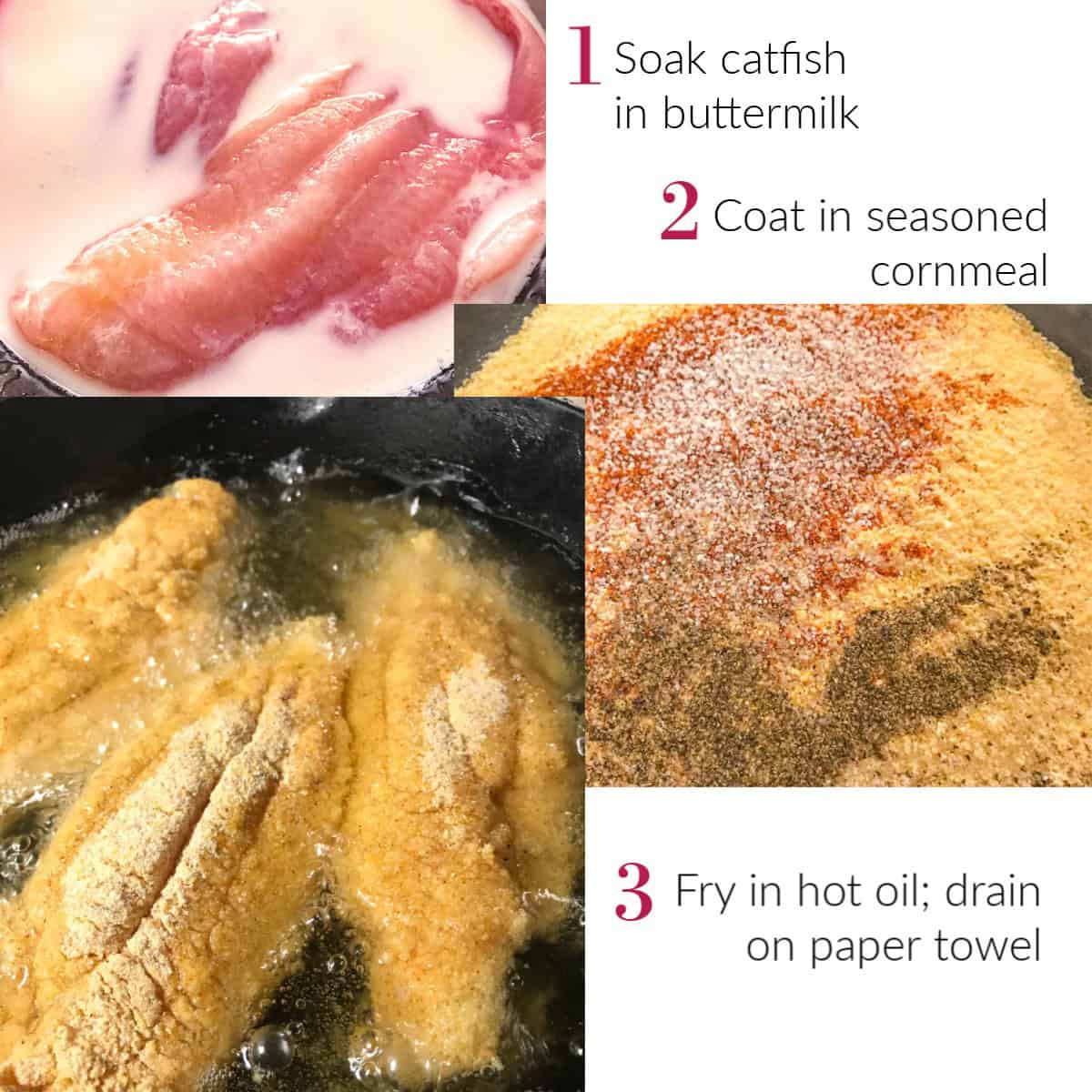
Why soak catfish in buttermilk?
Soaking fish in buttermilk is a method for minimizing the “fishy” smell. Catfish are bottom-feeders, meaning they swim on the bottom of the lake or reservoir floor. The acidity of buttermil reduces the “muddy” flavor.

Expert Tips for Crispy Fried Catfish
Frying fish isn’t hard, but requires a little practice and expertise. Here are tips to help your catfish turn out superb!
- Type of frying pan – A cast-iron skillet works best, or a heavy-bottom skillet, stockpot or Dutch oven tall stock pot or Dutch oven so when you flip the catfish fillet, it doesn’t splatter.
- Type of oil- This is important and key to this recipe. Use a high-heat oil: either canola, vegetable, walnut, grapeseed or peanut. Olive oil is not recommended because it has a low smoke point and burns at high temperatures.
- Temperature- This is the most common challenge for homemade fried fish. For restaurant-quality fried catfish at home, the oil has to be hot enough, but not quite to the smoking point.Restaurants fry at 350ºF, but that’s too hot for me, so at home, I fry fish around 312-325ºF
The best way to determine if it’s hot enough for frying is to use a good thermometer. Another good way to determine if it’s is hot enough (or too hot) is to sprinkle a little cornmeal in it. If it sizzles, it’s hot enough. If it doesn’t sizzle, raise the temperature and re-test.
How to keep the batter from falling off of fried catfish
- Fry the catfish fillets in batches, usually one or two fillets at a time.
- Once the fillet is placed in the pan DON’T TOUCH IT for at least 3 minutes. As tempting as it may be to turn it–don’t. Three minutes allows the bottom side of the fillet to cook and become firm. Once the bottom is a light golden brown, flip the fillet.
- After flipping the fillet, let it cook for another 3 minutes… again, DON’T TOUCH IT.
- Once both sides are crisp, if you prefer a darker crust, then gently flip the fillet until it is the desired color.
- Place cooked fillets on a wire rack to drain, then place them in a 200ºF oven uncovered. (When covered with foil, they get mushy and all your patience is in vain.)
- The first batch always turns out lighter than the others because the oil is fresh. If the darker color bother you, start over with new oil for each batch
What to serve with fried catfish
If you’re wondering what to serve with fried catfish, here are some delicious sides that are quick and easy to make.
Coleslaw always goes well, as does Smothered Okra and Tomatoes, Maple Baked Beans, Pinto Beans and Rice and a heapin’ bowl of Southern collard greens! Or, you might like a bowl of New England Clam Chowder!
Storage
Wrap in foil and store for up to 3 days in the refrigerator. Freezing is not recommended.
Make in advance and reheating
Wrap the cooked and cooled catfish fillets in foil and refrigerate. Make sure the fillets are cooled before wrapping them in the foil, otherwise, they’ll get soggy in the fridge. When you’re ready to serve, remove the foil and place fillets on baking sheet in a 450ºF oven for about 15-minutes.
More Southern recipes:
- Smothered Okra and Tomatoes
- Cream Style Corn
- How to make Southern Sweet Tea
- No Mayo Coleslaw
- No Beer Fish ‘n Chips
- How to Season and Cook Purple Hull Peas
- Creamy Creole Coleslaw
- Louisiana Remoulade Sauce
- What to serve with Fried Catfish
- Fried Oysters
- Pan Fried Trout with Smokehouse Almonds
- Fried Okra

Southern Fried Catfish
Ingredients
Catfish Coating Ingredients
- 4 fillets catfish a little over a pound, total
- 1½ cups oil vegetable, canola or peanut oil (you may need more or less; depends on how deep your skillet is) See Recipe Notes
- 2 cups cornmeal yellow
- 1 cup buttermilk
- 1 tablespoon cayenne pepper (red pepper, ground)
- 1 teaspoon salt
- 1 teaspoon black pepper
Tartar Sauce Ingredients
- 1 cup mayonnaise
- 2½ tablespoons relish , (dill or sweet); squeezed in a paper towel
- ¼ teaspoon onion powder
- ¼ teaspoon garlic powder
- ¼ teaspoon sugar
- ¼ teaspoon salt
- 1 teaspoon apple cider vinegar or lemon
Instructions
Catfish Fillet Preparation
- Pat fillets with paper towel4 fillets catfish
- Place fish in a large baking dish or plastic storage bag, pour in buttermilk; coat well; allow to sit for 10-minutes in refrigerator1 cup buttermilk
- Meanwhile, make tartar sauce and set aside; After the tartar sauce is made, coat and cook the fish
Coating Preparation
- In a large bowl, add cornmeal, salt, pepper and cayenne; stir with fork till blended2 cups cornmeal, 1 teaspoon salt, 1 teaspoon black pepper, 1 tablespoon cayenne pepper
- Using a cast-iron, or heavy bottom skillet, pour oil into skillet and heat to medium;1½ cups oil
- While oil is heating, take a fillet directly from the buttermilk and dredge it in the cornmeal mixture two times, patting it into the fillet each time; repeat with remaining fillets
- Check your skillet; the oil needs to be around 312 – 350ºF; you can sprinkle a few pieces of cornmeal in the oil to see if it sizzles; if it does sizzle, the oil is ready
- Cooking in batches of two fillets, place them in the hot oil; DO NOT MOVE THE FILLETS until they've cooked for 2 1/2 – 3 minutes on one side
- After 2 1/2 -3 minutes, use tongs and flip the fish over and cook for an additional 3 minutes
- Use a thermometer to measure internal temperature; it should be 145ºF
- Remove fillets from oil and place on a paper towel
- Repeat until all fillets are cooked and drained
- Plate fillets and serve with lemon and tartar sauce
Tartar Sauce Preparation
- In a small bowl, combine all ingredients; refrigerate until ready to serve1 cup mayonnaise, 2½ tablespoons relish, ¼ teaspoon onion powder, ¼ teaspoon garlic powder, ¼ teaspoon sugar, ¼ teaspoon salt, 1 teaspoon apple cider vinegar
Notes
- If using frozen catfish, thaw fish first by rinsing in cold water in a colander or allowing to thaw in the refrigerator
- Use a heavy-duty skillet (cast-iron) or Dutch oven
- The amount of oil depends upon the size of your skillet; you want about 2″ inches of oil
- If the oil starts to smoke, turn the heat down and remove the skillet from the burner for a few minutes. After the heat has been reduced, put the skillet back on the burner. Keep an eye on the oil.
- Do not move the catfish fillets for the first 3-minutes; if you do, the coating will fall apart. Just stand there and watch…and wait
- When flipping the fillets, use tongs or a spider
- Your second batch of fillets will be darker than the first; that’s because they’re being cooked in oil that’s already been used. If this really bugs you, throw out the first batch of oil and start over.
- Use a thermometer; internal temperature should be 145ºF
- A quick soak in buttermilk acts as a gluten-free binding agent and ensures an extra crunchy crust.
- Since this recipe does not contain any flour, the cornmeal cooks quickly-frying closer to 312°F without scorching the center of the fish before the internal temperature reaches 145°F.
When frying in batches, allow the oil to come back up to temperature before adding the next batch. - Do not move the fish for the first 3 minutes after you put it in the frying oil. While the fish is frying, use a heat-safe spatula to gently ladle hot oil over the exposed top side of the fillets; this helps the upper crust begin cooking before you flip it.
Nutrition Estimate
Yes. A quick soak in buttermilk acts as a gluten-free binding agent and ensures an extra crunchy crust.
Since this recipe does not contain any flour, the cornmeal cooks quickly-frying closer to 312°F without scorching the center of the fish before the internal temperature reaches 145°F.
When frying in batches, allow the oil to come back up to temperature before adding the next batch.
Do not move the fish for the first 3 minutes after you put it in the frying oil. While the fish is frying, use a heat-safe spatula to gently ladle hot oil over the exposed top side of the fillets; this helps the upper crust begin cooking before you flip it.
Always allow the oil to come back up to its target temperature of 312°F–350°F before adding the next batch. This ensures the cornmeal coating will fry consistently between batches.


Just curious when it says to coat the fish TWICE should I dip in buttermilk then dry mix then buttermilk and dry again?
Good question, Brooke! I was not clear in my instructions and have corrected (clarified) the recipe. Thank you very much. One dip in buttermilk; two dips in cornmeal:)
This is a fabulous recipe. I really appreciate all the helpful tips. I did not have buttermilk on hand, so looked up a substitute came up with thinned yogurt. I waited the 21/2 to 3 minutes before turning. The fish was so crunchy/crispy and was perfectly done. This is a major keeper of a recipe! Thank you!
Thank you, Lisa! I’m glad you liked the fried catfish!
Directions were very easy to follow. The finished product was delicious.
Steven, I sure do thank you for your kind comment about the catfish recipe!
Haven’t tried the recipe yet but wanted to say, this is the best layout of a recipe I’ve ever seen. Not having to scroll up and down to double check measurements is a blessing.
Thank you for the compliment!
I am dairy free… Can I use a plant based milk instead of the buttermilk?
Yes. Use soy milk and add fresh lemon juice to it. Let it sit awhile and it will turn to buttermilk.