How to Perfectly Boil Green Beans
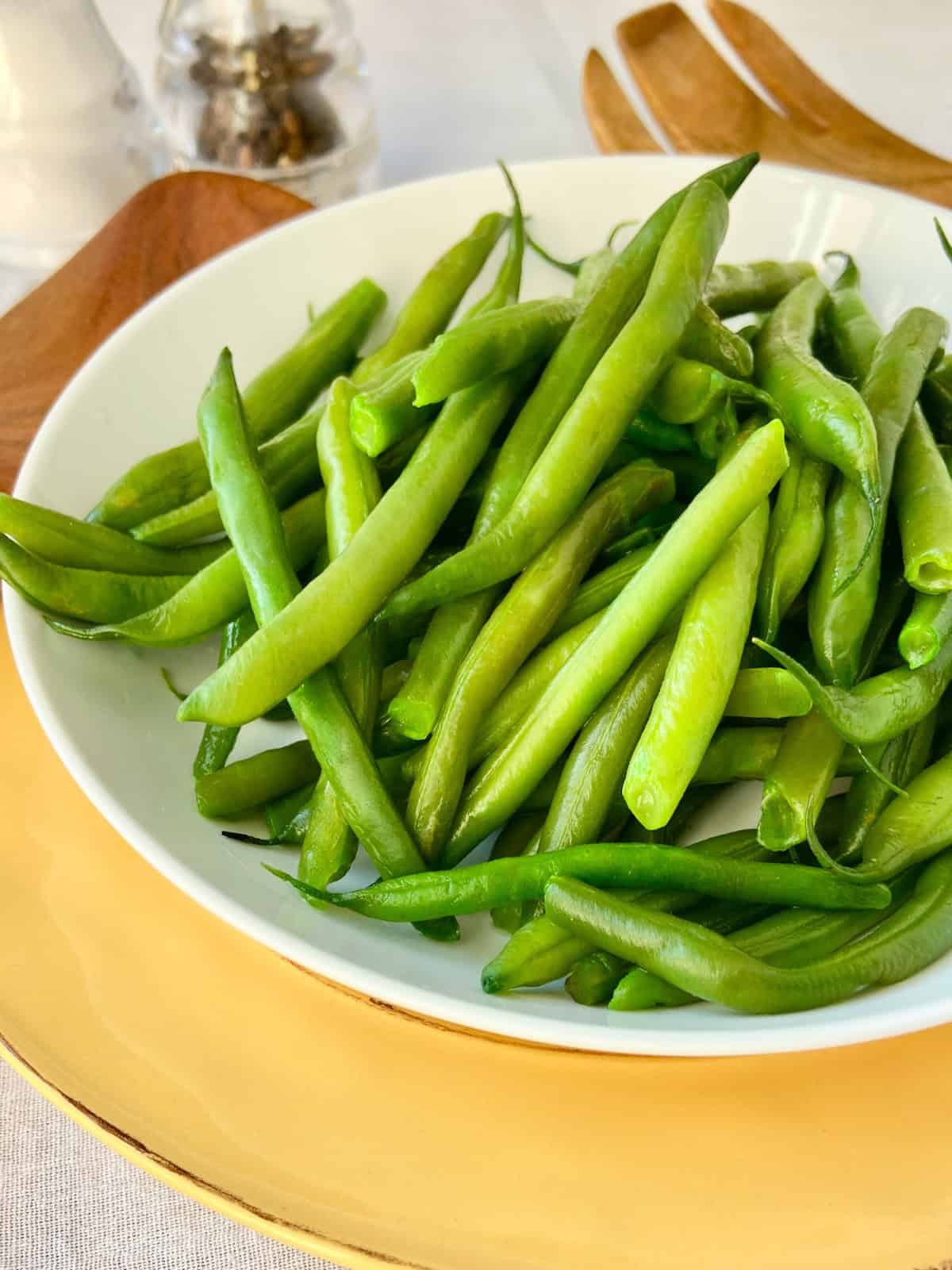
3 food science facts you must know in order to perfectly boil green beans. Tried and true method ensures they remain bright green, slightly crisp, flavorful, and are ready in less than 7-minutes!
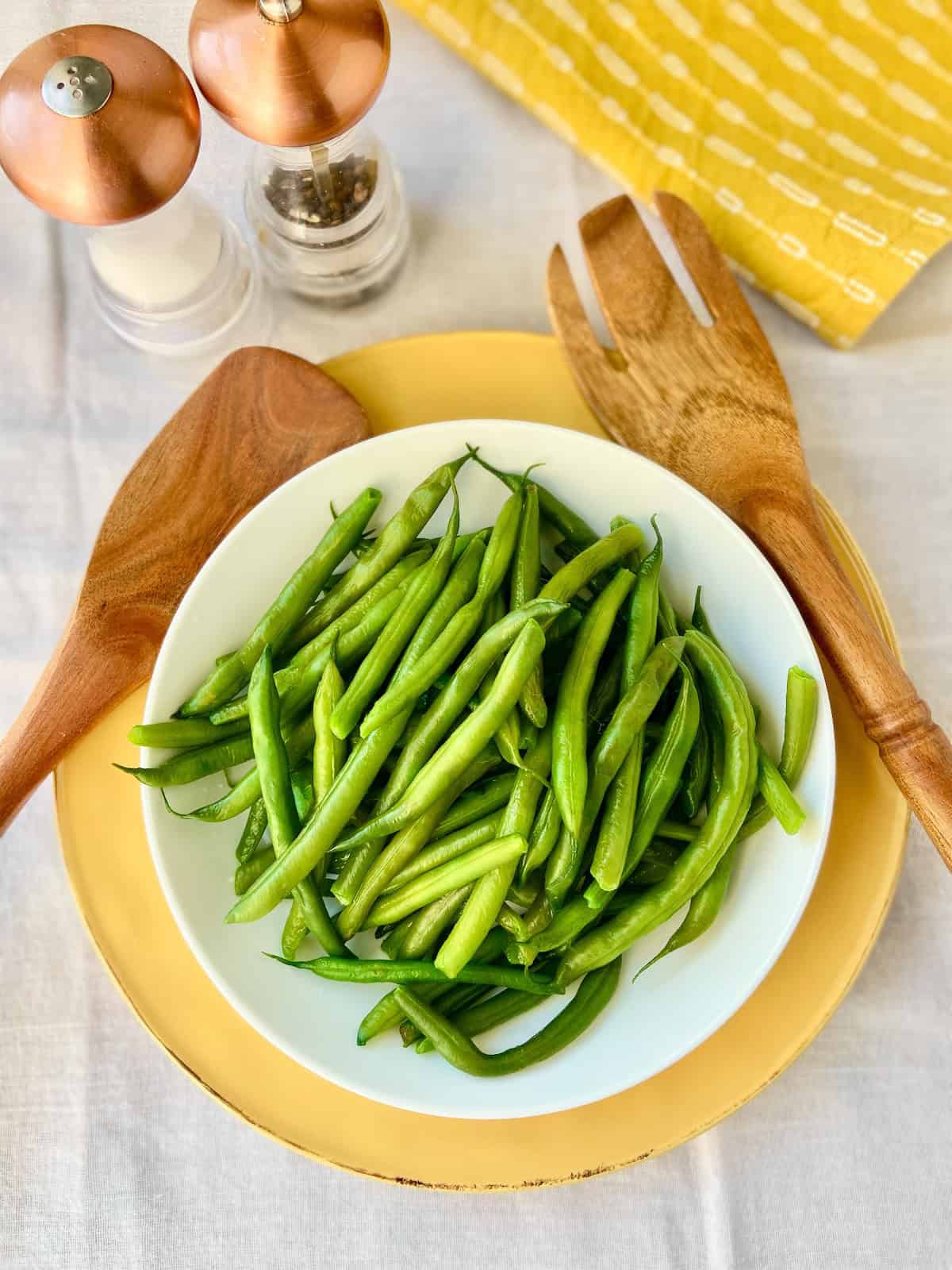
This quick and foolproof method is based on Harold McGee‘s culinary expertise. McGee is a food science writer and author of the infamous book, “On Food and Cooking,” published in 1984, which has been used in food-science courses in many universities.
3 tips for how to make perfectly boiled green beans
Fresh green beans have a naturally sweet flavor that pairs beautifully with many dishes. Follow these three tips for making the most flavorful, crisp, bright green beans ever.
Heavily salt the boiling water
- The salt ratio is 2:1
- The general rule of thumb is: 2 tablespoons of salt per quart of water.
- The beans should be fully immersed ; Usually, 1 ½ – 2 pounds of green beans need 2 quarts of water (8 cups).
- The type of salt doesn’t matter. Use table salt or Kosher salt
A common and initial reaction to the amount of salt is “that seems like a lot of salt,” and yes, it is; however, the beans do not absorb all of the salt and they turn out perfectly seasoned.
Boiling Time
The recommended boiling time varies between 4-7 minutes, and the boiling time never to exceed 7 minutes. This 7-minute cooking time is perfect for up to 2 pounds of string beans. If you’re cooking more than 2 pounds, you’ll want to cook them in batches, each for no longer than 7-minutes.
Immediate Ice Bath
Submerge the cooked green beans immediately into a cold ice bath. This stops the cooking process and ensures the green beans retain their vibrant green color
How to boil perfect green beans
- Rinse and snap off the darkest end where the bean was attached to the pole or vine, (that’ why their often called “pole beans”), and remove any strings (that’s why their often referred to as “string beans.”)
- Bring a large stockpot of water to boil; once at a rolling boil, add salt
- Add green beans and set the timer for 5 minutes; meanwhile, prepare a big bowl of ice water and put it next to the stockpot of green beans
- Test the beans for tenderness at the 5-minute mark; if they’re still too crunchy, cook them another 2 minutes
- Immediately transfer cook beans to the ice bath and allow to rest until cool
FAQ’s
The cooking water mimics the sodium content of seawater, which has a concentration of 3% salt. Ample salt speeds up the cooking procss, and ensures the vegetables retain their bright green color; this color retention is further enhanced by immersing them immediately in an ice bath to stop the cooking process.
According to Harold McGee, the type of salt doesn’t matter; it’s the concentration of salt that is important. His formula of 2 tablespoons of salt per quart ensures the water is at a 3% salt concentration, which is the same as salt from the sea.
The best way to warm the beans is to pat them dry, heat a large skillet on medium-to-medium high heat, add a little butter or oil, and place them in a single layer and saute 3-5 minutes while rotating the skillet.
If you have a big bunch of green beans to reheat, work in batches. After you saute each batch, place them in a warm oven until all the beans are sauteed.
Yes, however they will be softer and not have that crisp snap as the initial batch.
Storage and make ahead
Store green beans in an airtight container in the refrigerator for 3-5 days.
To warm them before serving, heat a large, dry skillet on medium to medium-high heat and working in batches, lightly toss and rotate them in the hot skillet; transfer to a serving bowl and cover with platic wrap until ready to serve.
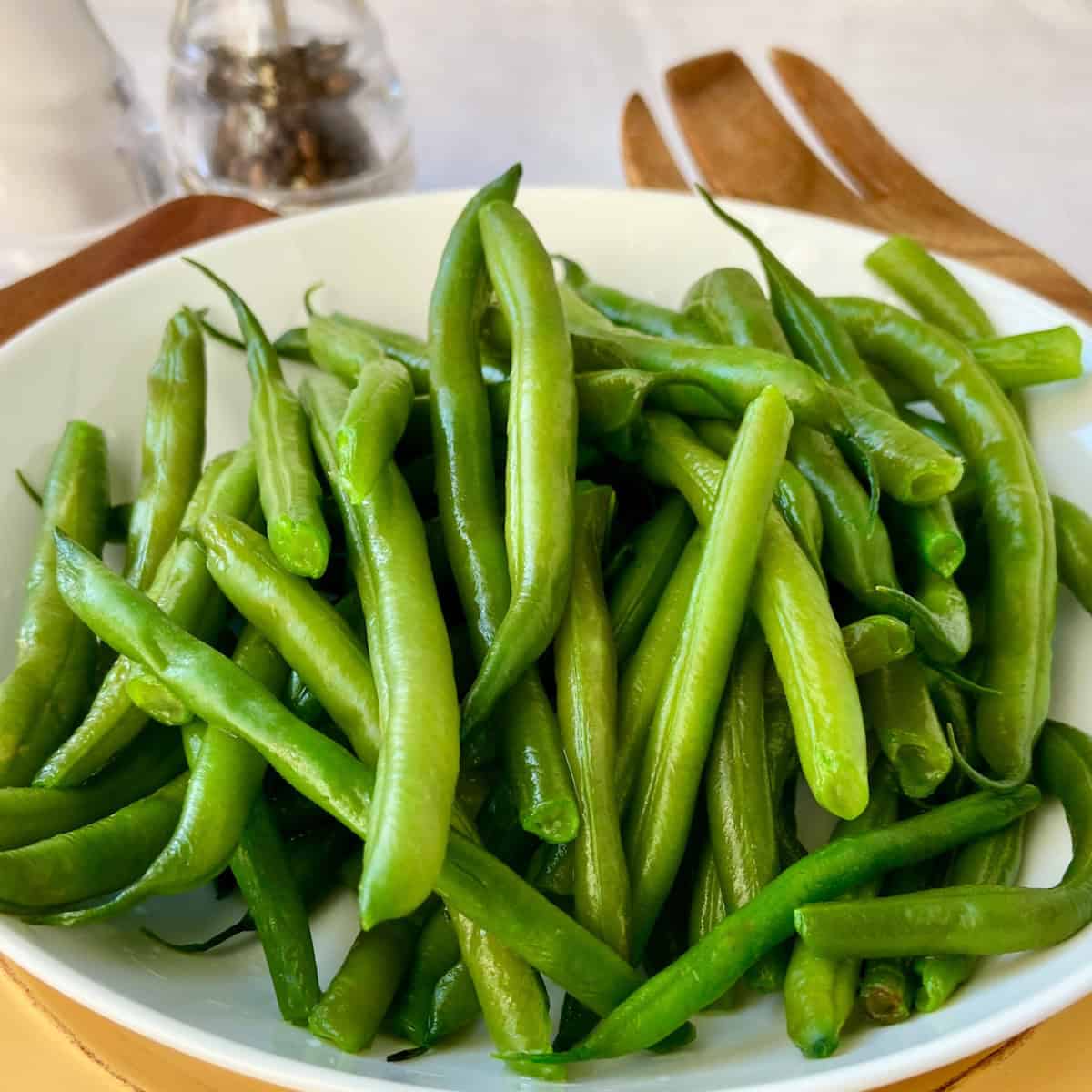
This foolproof method can be applied to other green vegetables like broccoli, Brussels sprouts, snow peas, asparagus and sugar snap peas.

How to Perfectly Boil Green Beans
Equipment
- Large stockpot
Ingredients
- 2 pounds green beans, rinsed and trimmed (See Recipe Notes for Yield)
- 2 quarts boiling water (8 cups)
- ¼ cup salt (4 tablespoons)
- 2 quarts of ice water
Instructions
- Rinse and snap the end of the beans; remove any discolored or damaged beans
- On high heat, bring water to boil; once boiling, add salt2 quarts boiling water (8 cups), ¼ cup salt (4 tablespoons)
- Add green beans; bring back to boil and cook for 5-7 minutes; do NOT cook more than 7 minutes (See Recipe Notes)2 pounds green beans, rinsed and trimmed
- Set up a big bowl of ice water next to your stove2 quarts of ice water
- Once you've hit the 5-7 minute mark, remove beans and immediately submerge in cold water; allow beans to chill for 1-minute; remove from ice water and pat dry; serve immediately
- If you want to heat the beans after you remove them from the ice bath, heat a dry skillet on medium-high heat. Working in batches, place a single layer of beans in the hot skillet, rotate and toss the beans to ensure all of the beans get warm, then plate on a serving platter.